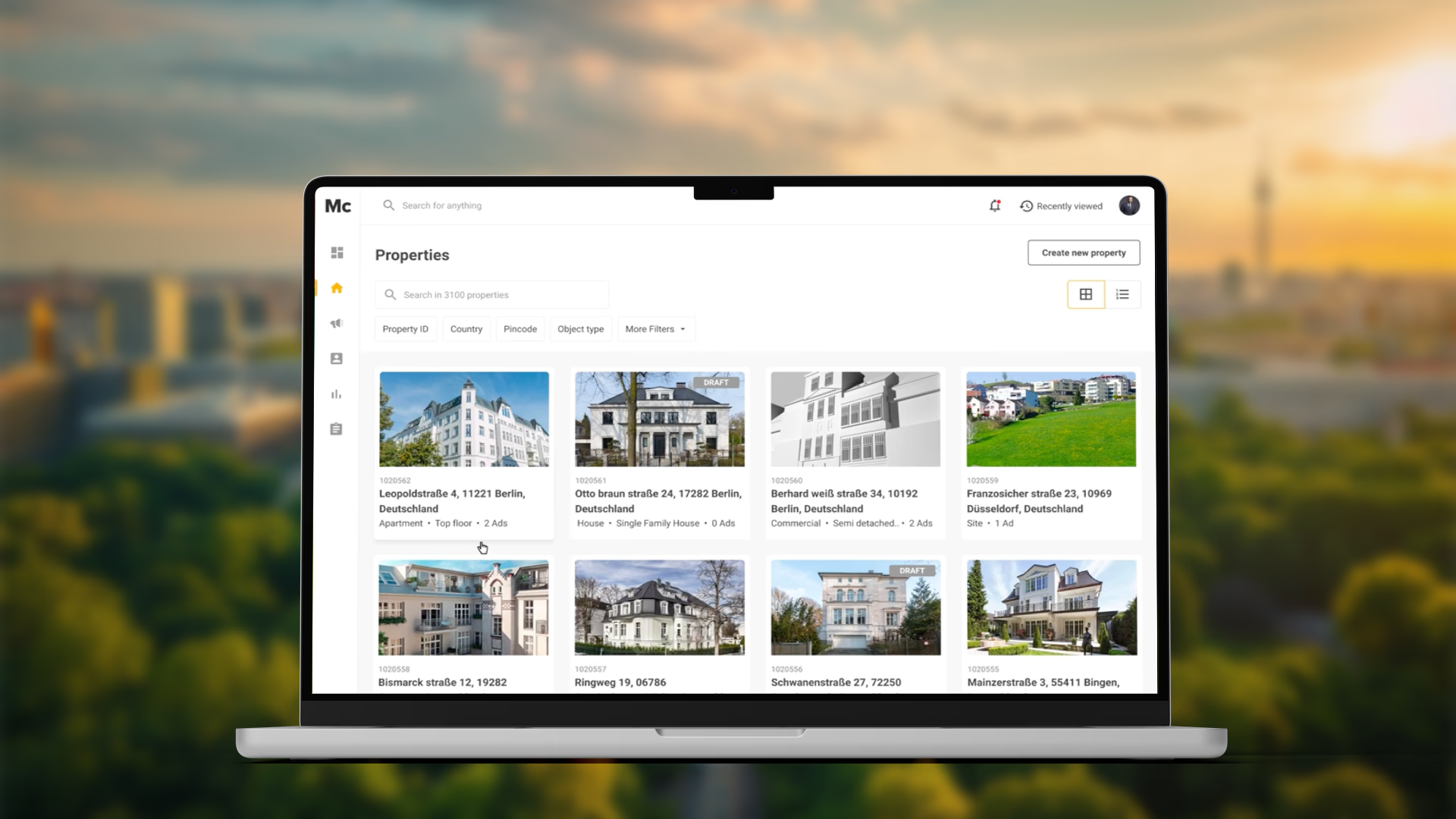
McMakler
A full redesign of the internal tools a fast-growing German real-estate company relied on daily, plus a fourth built from scratch — grounded in hands-on research, and a stronger design culture along the way.
Three tools. No single source of truth.
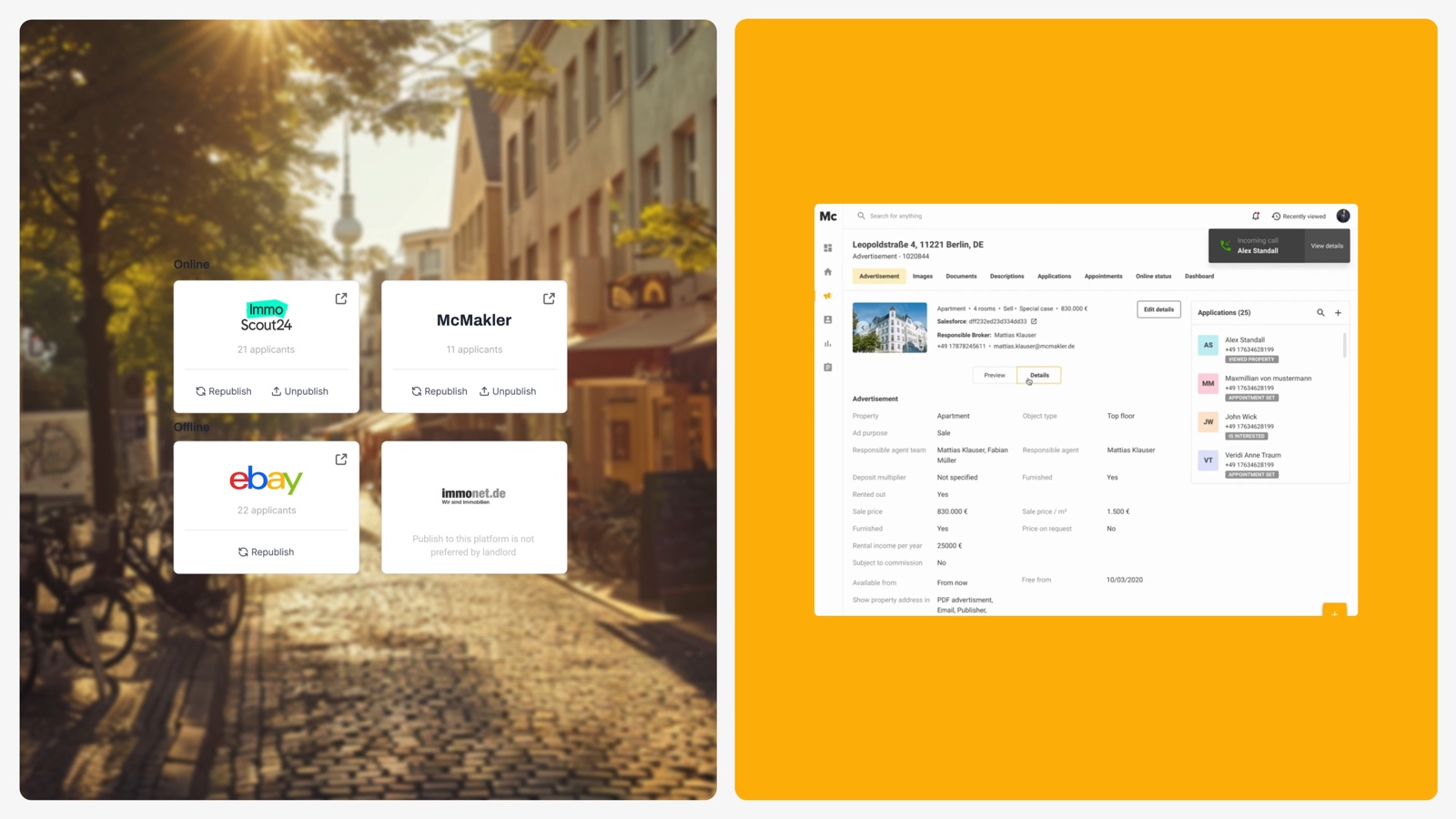
McMakler runs on in-house agents backed by its own software. When I joined, the tools they used daily were fragmented — data siloed in each system, with no reliable view across a whole transaction. My work covered three: Immoforce (property management), Alla (broker scheduling), and Brokerforce (task management, built from scratch). None talked to each other, so agents kept their own spreadsheets to track what the software should have shown them.
The brief said UI refresh. The product said otherwise.
The brief was simple: a UI refresh, a few flow fixes, reuse the MUI components, no research phase. But the app's logic lived nowhere — business rules, field order, which states triggered which workflows, all of it locked in people's heads. The brief was asking me to improve a UI without knowing what it did.
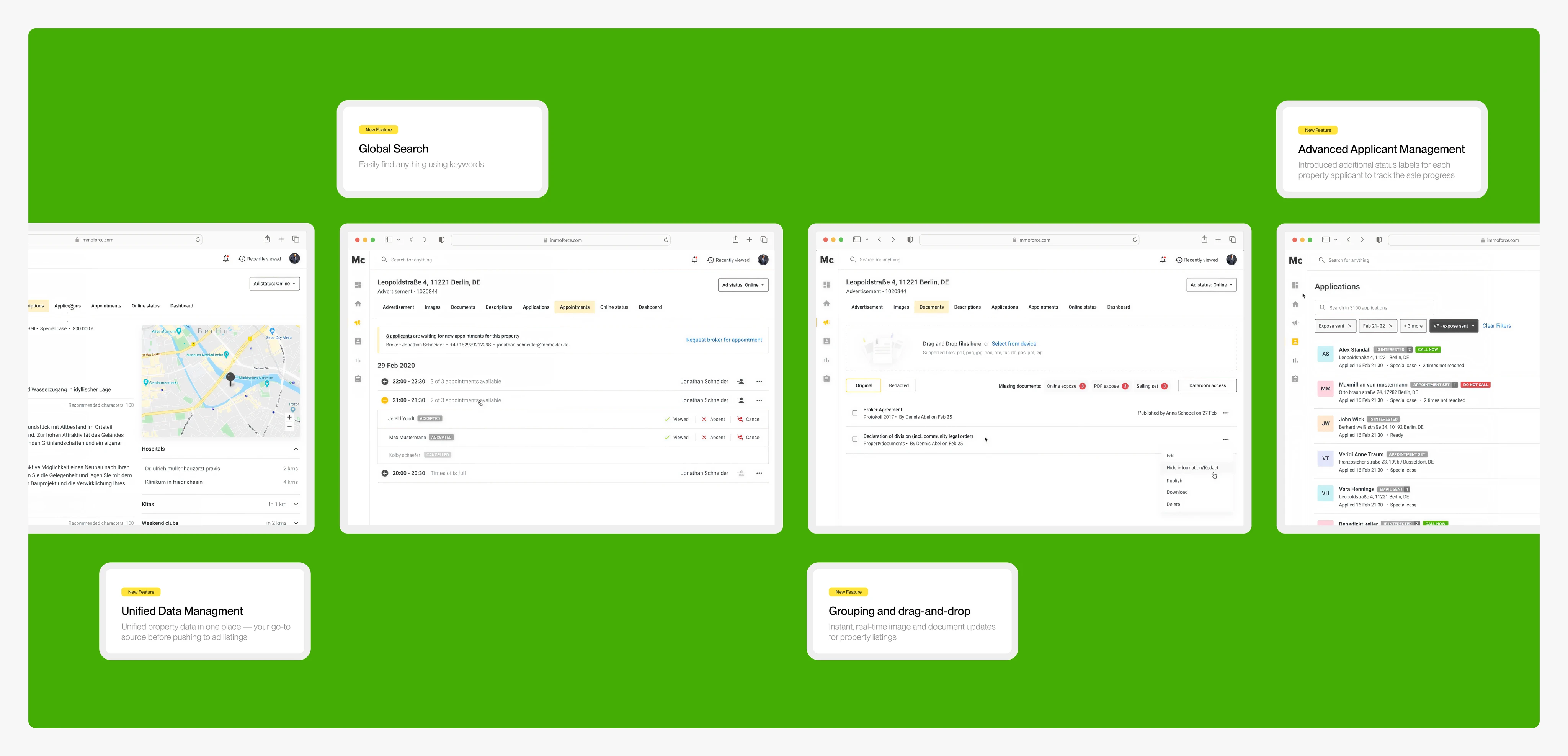
I proposed a one-week research sprint instead: one deliverable, the logic written down, user findings, one direction to test. Three days in person with customer care, SWAT leads, and ops, plus FullStory recordings to check what people said against what they did.
When someone pushed back in review, I had a recording to show them. 75% of designs passed first-round approval, because they were grounded in how the system actually worked.
The page took 80 seconds to load
Not 8 seconds. 80. Agents used Alla to manage calendars and coordinate viewings. The load time was a backend problem engineering owned; mine was making it worth the wait.
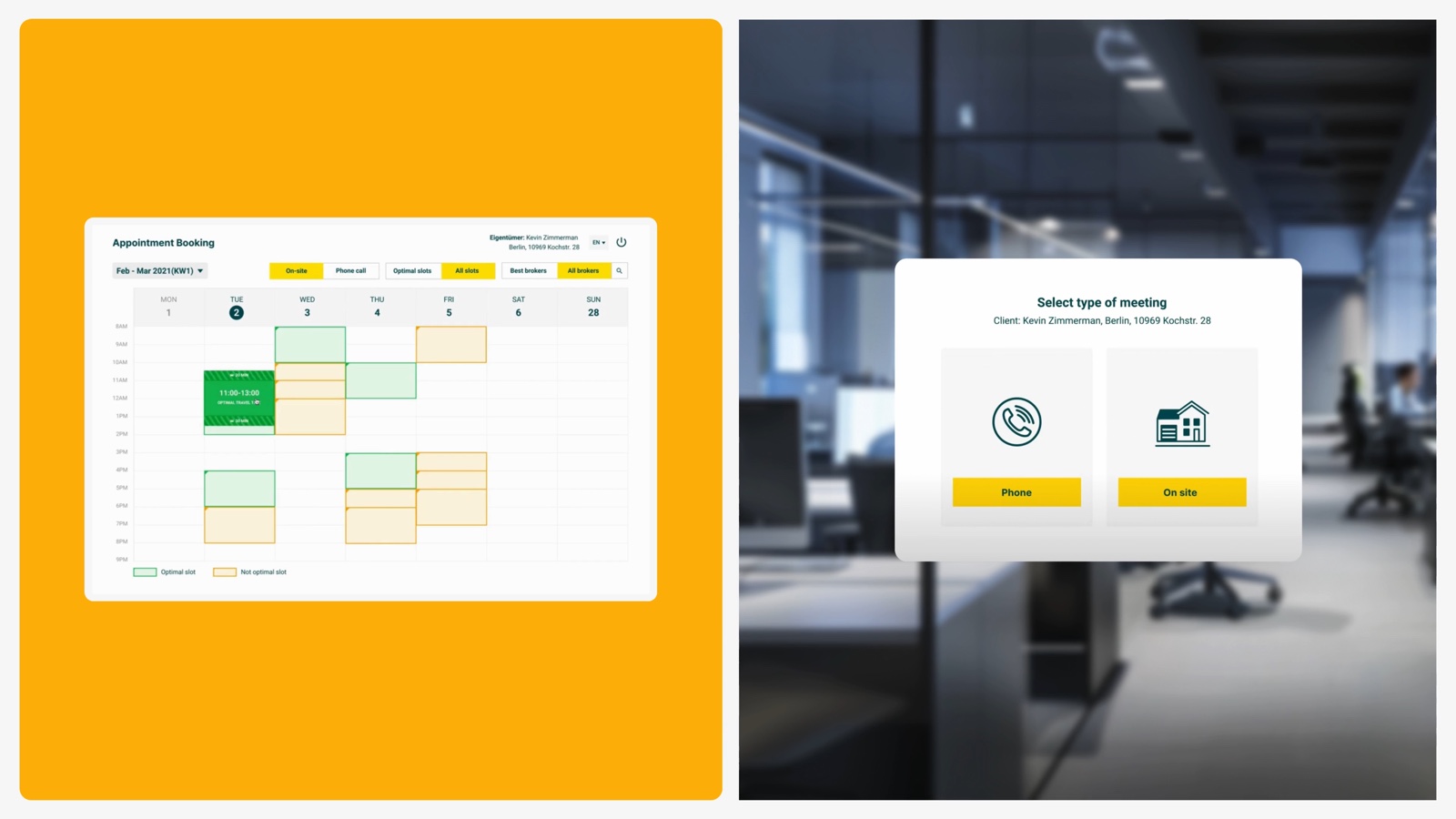
Three design iterations:
Alla shut down about three months after launch. Adoption stayed low — agents stuck with familiar tools, and some scheduling never left the phone.
What I took from Alla: we never asked enough agents, early enough, whether they'd use any tool for this at all. That question belonged before iteration three, not after. Now I run an adoption check before any redesign: interviews with real users, up front, to confirm they'd use it.
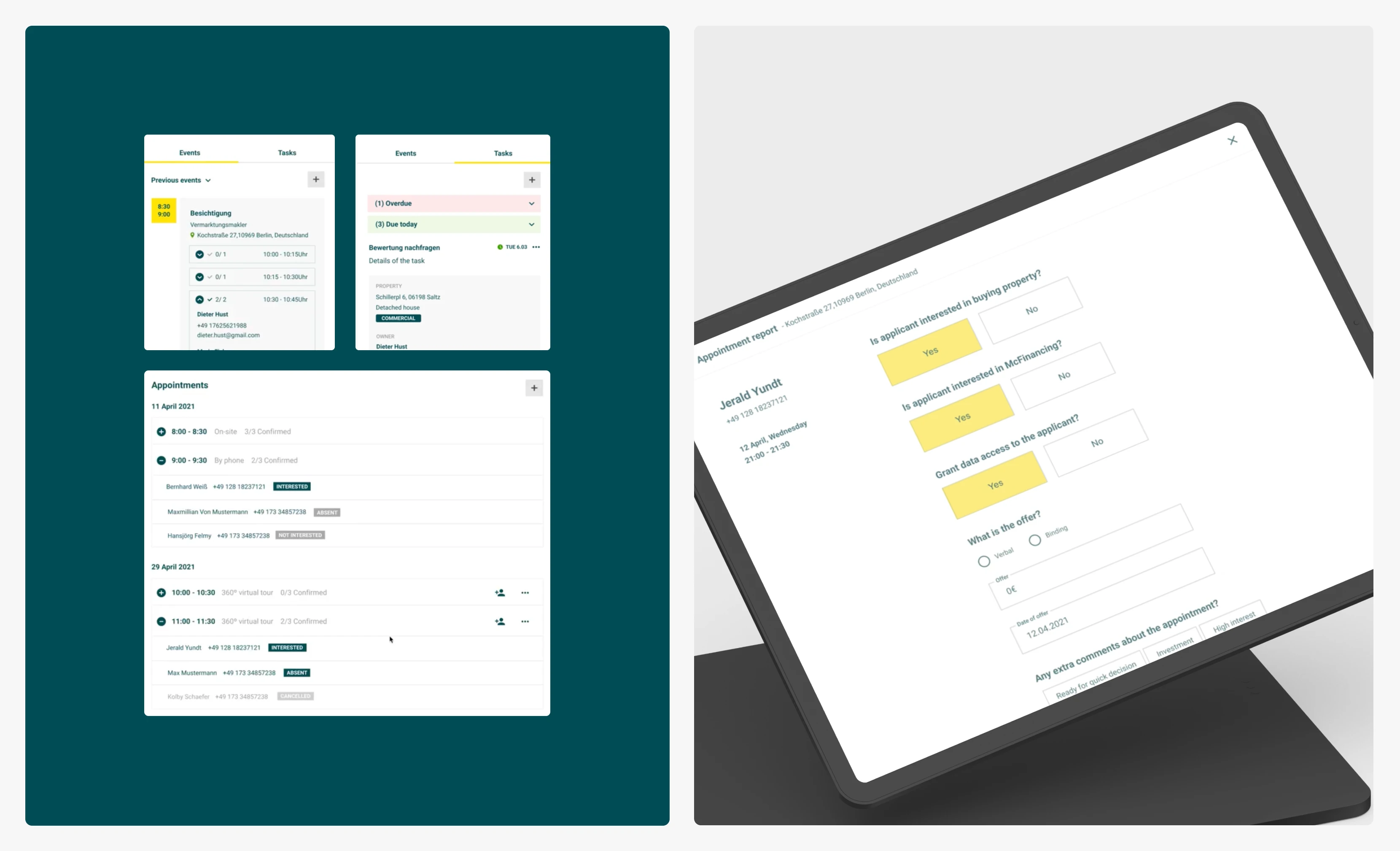
From paper to product
Broker workflow ran on paper and spreadsheets: tasks assigned, tracked, and closed by hand. The goal was software that replaced all that while still fitting how brokers already thought about the work. People won't adopt a tool that thinks differently than they do, so the design matched existing mental models first, then improved the mechanics underneath.
This ran alongside the Immoforce redesign: reworking one product while building another from scratch. Immoforce's modular patterns fed straight into Brokerforce, so agents using both weren't learning two visual languages.
What in-person research reveals that interviews don't
McMakler was the first job where in-person research became a habit, not a one-off phase. Sitting with customer care while they used Immoforce showed me things a 30-minute interview would miss: the shortcuts, workarounds, and small hesitations people never think to mention, because to them it's just how the thing works. The most useful things I learned there, I learned by being in the room while someone did their job.